|
|
   |
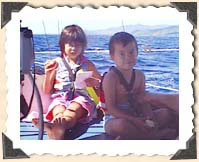
The McRorys answer readers' questionsLindsay McRoryJanuary 14, 1997 Question: Other than the question, "Can I go with you to the South Pacific?" I want to ask: Do you think you'll be writing a book about your experiences? I go to your log book at least once a week to read about your adventures, the islands, and the warmer climes. A whole book would be great. Though, I suppose, the story isn't exactly finished yet, is it? When do you think you and your family will be done sailing? Jeff from [198.147.135.155] on Thursday, Nov. 14, 1996. McRorys: No book is in the plans. I enjoy doing the logs, but don't fancy myself a writer. There are a number of good books out there already. I don't see what we are doing as anything special that hasn't been covered by other books. We seem to be a family of converted cruisers, so our sailing will never really be done. There will only be different passages in different parts of the world. Currently we are planning on taking a year off cruising, living in Puerto Rico while we do a refit to Hakuna Matata, and taking care of business in Canada.  Adam from mn.us on Friday, Nov. 15, 1996. McRorys: The biggest thing that continually surprises me is the amount of people that just buy a boat and go, with very little or no experience. For the determined, this sometimes works. People that abandon the sailing/cruising life early on usually have different expectations about what it's like. They picture beautiful, calm tropical bays, and cocktails at sunset. Aside from sailing skills, first-time distance cruisers are usually startled by the amount of maintenance that has to be done and what you need to know about weather. Some boaters go out and follow other boaters around. Before setting sail, I think the most important thing is to find out if you really like it. If you have no or little experience, take a one-week ASA/CYA cruise-and-learn course. They are available all over both coasts. There are also ASA/CYA navigation courses that should be taken afterward as well. From there you will have all the basic skills to coastal cruise in a 25- to 35-foot boat. My favorite sailing books are: Rob from harvard.edu on Friday, Nov. 15, 1996. McRorys: Kita misses her friends. Wesley doesn't miss anything and will have a tough time adjusting away from a water-based lifestyle. What Denise and I miss largely depends on where we are and what the state of Hakuna Matata's systems are. For example, having all the power we could use was a luxury once we hit Palmas Del Mar. Family gatherings are sad to miss. Having your feet not covered with sand fly bites is a bit of a treat.
We always keep a lookout while underway, particularly at night. I don't believe that radar is a good substitute for vigilance and a good pair of binoculars. Our radar has failed to pick up small wooden fishing boats (Nova Scotia lobster boats, Bahamian conkers, Haitian sailing things, Dominican rowing launches) so we keep a good lookout. If a submerged container is in your path, there's not much you can do about it. If we ever hit something like that and couldn't stop the leaking, it's time for the life raft. Love your postings and look forward to each new one. Take care! Jack Van Dorn from [205.161.239.108] on Friday, Nov. 15, 1996. McRorys: Different cruising styles and destinations have different equipment lists. Our own cruising style has changed a lot in the last year. Seasoned cruising veterans, all on the same route, can have opposing views on things like life rafts, inverters, generators, radar. My own must-have list (other than the usual) would include: John in CA from [207.113.176.63] on Friday, Nov. 15, 1996. McRorys: Ham/SSB has been very good. The satellite system worked well until last month. Even if it was 100 percent, it would not be a replacement for SSB/ham. Currently the satellite costs are expensive; until the costs come down to $1 minute or less, I don't think they will replace ham/SSB for weather info and distance communications. We have not tried any radio patches to home, but we know people who do this all the time. Good luck and Godspeed. Larry Moore from [207.146.217.128] on Friday, Nov. 15, 1996. McRorys: The not-so-friendly ships are at harbor, not usually at sea. Most of the problems this year were in Venezuela. Small fishing boats robbing boats at anchor, at the beach, pretty well anywhere. My wife and I run an outdoor adventure program for kids and teens and are of the adventurous type ourselves. Although it sounds as if you are getting in a workout windsurfing, what type of exercise regimen do you have planned for your time on the high seas? Enjoy the journey. Tom Bryant from [208.192.18.217] on Saturday, Nov. 16, 1996. McRorys: Our longest passages have only been four days at sea. During each one of those, it was to rough to think about exercise. At anchor is another story. The kids would swim for the entire day if we let them. We walk and jerry-jug a lot. The work that has to be done on the boat is quite physical and the kids have been doing their share. Still, most afternoons we do something, whether it be windsurfing, swimming, boogie-boarding. Best of luck from a pilot of the air. Ben Ochs from [204.233.143.2] on Sunday, Nov. 17, 1996. McRorys: Periods of frustration are usually brief and so far associated with things breaking on the boat. Denise and I both thought we would miss land life more than we have. We had budgeted to go home every six months for a few weeks if we missed it. It's been one-and-a-half years and we haven't felt homesick enough to go back. Its hard to separate truly enjoyable from normally enjoyable times. Things can shift from normally relaxed and enjoyable to miserable with no gray area in between. We've had few miserable times. Hurricane Hortense and a storm in Bellhaven, North Carolina, were both bad. The two weeks of downpour in Luperon weren't great. A ground swell in Anchorage can put everyone on edge for the day; it's hard to sleep when the boat's rolling. All in all, it's an addicting lifestyle--once you get into it, it's difficult to give up. Good luck! Derek in MA from [208.195.107.130] on Monday, Nov. 18, 1996. McRorys: A lot of boats bring pets, mostly cats and dogs and the occasional parrot. I have never heard of anyone having a problem with a pet in the entire Caribbean. Denise and Kita are both allergic to cats, otherwise we would have one. John from [204.254.94.5] on Monday, Nov. 18, 1996. McRorys: This is a difficult question because we believe that we are doing the right thing. Denise and I both enjoy doing home schooling and actually consider it a privilege to be able to do it. The only independent metric we can point to are other long-term cruising kids we've met along the way. Unfortunately our experience is mixed, with no middle ground. They both still maintain contact with their friends back home. We are starting to see other cruising families on a regular basis. We just left Kita's friend Jamie, aboard Moonshadow Texas in Boqueron. We will meet up with young Nathan in Salinas in a few days. It's hard to say what the long-term effects will be. They are both older than their years (most of the time). So far the biggest noticeable effect is the lack of TV; they don't like the violence in cartoons at all, it scares them. John from [204.254.94.5] on Monday, Nov. 18, 1996. McRorys: The Whitby 42 has been a very good boat for us. It's not as spacious below as other 42-footers, but it is light, fast (a lot faster than I gave it credit for), and carries a lot of fluids. Most of the changes (other than new toys) are relatively minor: Hope your travels continue safely. Randy from [205.131.56.118] on Monday, Nov. 18, 1996. McRorys: Mechanical problems are a pain in the fanny. We have the shop manuals and parts diagrams for pretty well everything. So with a good selection of basic tools and lots of spares dealing with breakdowns, it's not so bad. If we lost our mast, we would jury-rig and motor. If our engine seized for good, we would sail someplace for a new one. Other than the boat sinking and having to get into the life raft, I can't think of anything too serious. What's been the best source of information so far? As you continue your travels do you think your sources will change significantly? What books would you recommend to help in understanding forecasts and in timing offshore passages? Thanks for all the posts. Keep 'em coming! Doug from intel.com on Monday, Nov. 18, 1996. McRorys: Understanding weather and being able to apply it to our route is the single most important factor in safe, comfortable cruising. Impatience, or not having good criteria for the right time to leave, can be hard on the crew and the boat. A weather window really depends on where you are going and what area you are in. To cross the Gulf Stream from Florida to the Bahamas, you wait for the south-southeast winds of less than 20 knots for the next 48 hours. If it's been blowing hard from the north, you may have to wait for the northerly swell to settle down before leaving. When we left the Dominican Republic, we waited for a cold front to roll down the U.S. and Cuba. This created a stalled area of light easterly winds in front of it. We followed that front to Puerto Rico. The trade winds follow a cyclic pattern. If not influenced by cold fronts or tropical disturbances, they follow a predictable pattern moving from south, southeast, to east, and diminishing in strength as they move to the east. Sometimes if the wind is blowing hard southeast it will just stop for a day then pick up slowly from the east. These cycles can take from two weeks to six weeks. By paying attention, it's easy to pick up on them. We get our weather information (reports and weather faxes) from ham/SSB. We get some information from the NWS Web site as well; it's the same as what is broadcast over weather fax radio. Tom F. from house.gov on Monday, Nov. 18, 1996. McRorys: We have been happy with everything on board. We don't use our water maker as much as I thought we would. The air conditioner is a very small Cruise-Air for emergency cooling. We have only needed it a dozen times so far. It would be too small for use in southern Florida where the summers are cruelly hot and humid. We would love to have you all aboard for a sundowner and to pick your brain as we plan to live aboard as soon as retirement permits. Godspeed and good luck. Frank & Peggy Dolan from [152.163.231.184] on Monday, Nov. 18, 1996. McRorys: If we're in the Virgins in February, we'll keep an eye out. Good luck and fair winds. Cindy & John Rossley from swarthmore.edu on Tuesday, Nov. 19, 1996. McRorys: Not currently, although I really wished we were not in such a hurry coming down the coast. We missed great cruising in Maine and in the Chesapeake. (P.S. We planned to spend hurricane season '97 in Venezuela, but the seismic company my husband works for had a boat hit by pirates just off the coast--the crew told us we'd be better off hanging in Trinidad or Curacao.) Susan Scott from [207.18.199.249] on Tuesday, Nov. 19, 1996. McRorys: Our company was already doing distributed development throughout North America. If you have an e-mail address, can transmit files, then you can contribute to a project team. The best example of how successful telecommuting can be is to look at the Linux operating system or any of the GNU tools. It's hard to believe how much work has been done on these systems without long-term contributors ever meeting one another. I have always believed that the office environment is a lot less productive than most people realize. By the time you subtract all the office disruptions, the amount of time spent on real work is probably in the 30- to 70-percent range. But for some reason, middle managers feel the need to walk around and see everybody, or let everyone see them. It's a throwback to management styles of the '60s. If observed from the outside, it's more of a tribal ritual. As telecommunications improve and companies adjust to a knowledge-based society, there will be a lot more people doing what I do. Prior to leaving on this trip, we spent the summer on our old boat in the Pacific Northwest. I didn't tell a lot of people we were going. I worked from the boat. When I got back, some people never realized I was gone. I didn't have to make a strong case for this trip. We met quite a few boats returning from Venezuela this year. The advice was unanimous, don't go, it's not safe. The exception being Margarita Island and a few other small out-of-the-way places. Even traveling in groups wasn't safe this year. Trinidad was too full because of the problems in Venezuela. The SSB was full of reports of people getting 48-hour clearances to stock up before going someplace else, although we didn't meet anyone who had firsthand knowledge of this. I think the ABC islands will be our choice next. Luperon in the Dominican Republic isn't such a bad deal either. We will most likely spend another hurricane season there. Some people hole up in Salinas, Puerto Rico, with good success. Seems we'd be well short of our current beans and rice diet. Maybe not. And, sorry to put two questions in, but maybe they are related: Any comments on your abundance of technology? Granted some is necessary for your telecommuting (sat communications, computers) and a modicum of safety, but sounds like there is quite a bit of hardware a long way from the nearest field engineer. Thanks much for the entertaining read. Andy from mn.us on Wednesday, Nov. 20, 1996. McRorys: We actually eat a lot of rice and beans. Our boat was 130k. We put another 40k into safety gear and offshore equipment. We plan on 7k to 12k per year in refits/haul out. Our technology isn't that leading edge. We have two laptop computers and one desktop. Satellite communications are from Westinghouse. Our ham/SSB and 2-meter ham are connected to a packet radio controller (AEA Packratt 232). The packet radio controller plugs into any of the computers. This is actually a fairly standard package. Some redundancy is required. Ham/SSB is backed up by a small Sony world-band receiver. Marine VHF is backed by the 2-meter ham (it was modified). For the satellite, I have a spare antenna. What suggestions can you give to make the dream a reality? How many practice runs and how many overnighters did you make before you felt ready for your journey? I have one last question about your boat: Did you pick your 42-footer for certain reasons such as solo captaining abilities, or did it have to do with what you could afford? If you could have any boat in any size, what kind of boat would you pick and why? Chris L. utah.edu from utah.edu on Wednesday, Nov. 20, 1996 ([email protected]). McRorys: I had quite a bit of experience sailing and racing, not much experience maintaining things. As a family, we spend about three months cruising on our old boat before we decided to do this longer term. If you don't have any experience, take an ASA or CYA cruise-and-learn course. Take the ones where you spend a week on the boat. From there you can start making your own decisions. Because we had been cruising so much already, we didn't do any practice runs. We got on the boat and sailed 1,100 miles from Kingston, Ontario, to Halifax, Nova Scotia. A boat in the 40- to 50-foot range has the interior size and is a lot more comfortable (relatively speaking) when the going gets tough. My all-time favorite would be an aluminum Sundeer 64, designed by Steve and Linda Dashew. It's a very narrow, light boat designed to be sailed by two people. Normally a 65-footer would be way too big for Denise and I to safely handle. The Sundeer 65 was designed for safety and fast passage. My next pick would be a Privilege 45 Catamaran. Thank you. JOSHUA from [207.1.29.107] on Wednesday, Nov. 20, 1996. McRorys: Kita is 7 and Wesley is 5. If so, how much do you rely on them? Do you make your own forecasts and what data do you use? Thanks. Good Luck and happy sailing. David B. from [199.17.26.22]. McRorys: Primarily our weather information comes from ham/SSB. The National Weather service broadcasts the Offshore Marine Forecast on 4426,6501,8764 kilohertz four times a day. You have to interpret this data with your location. Weather Fax information is broadcast on several stations. I usually get the surface report and the 500mb chart. I can get real-time GOES-8 satellite picture from a 2-meter ham. Usually though, I just pull them off the Internet. The magic is to check the information received against what we see and what we can measure (barometer, temperature). For example if a cold front is on its way down, watch for mares' tails prior to the wind shift. The barometer should be rising as well. If it isn't, then the front may have stalled or be dissipating. Here is an example of the offshore report: 036 OFFSHORE MARINE FORECAST CARIBBEAN SEA AND SW N ATLC BEYOND 50 NM FROM SHORE.
CARIBBEAN SYNOPSIS...FRONTAL TROUGH FROM CENTRAL CUBA TO HONDURAS WILL
MOVE NW AND EXTEND FROM CENTRAL CUBA TO YUCATAN PENINSULA BY FRI. BROAD
AREA OF LOW PRES OVER W CARIBBEAN WILL CONTINUE TO MOVE NW AND PRODUCE
WIDESPREAD SHOWERS AND TSTMS THROUGH FRI.
NW CARIBBEAN N OF 15N AND W OF 75W.
..GALE WARNING N OF 19N AND W OF 80W TODAY... TODAY...N OF 19N AND W OF 80W WIND NE 30 TO 35 KT. SEAS 10 TO 15 FT.
ELSEWHERE NW OF THE FRONTAL TROUGH WIND NE 20 TO 25 KT. SEAS 8 TO 10 FT.
SE OF THE FRONTAL TROUGH AND E OF 80W WIND E 15 TO 20 KT. SEAS 7 FT. SE OF
THE TROUGH AND W OF 80W WIND NE TO E 10 TO 15 KT. SEAS 5 FT. WIND AND SEAS
HIGHER IN NUMEROUS SHOWERS AND SCATTERED TSTMS. .TONIGHT AND FRI...N OF
20N AND W OF 80W WIND NE 30 TO 35 KT. SEAS10 TO 15 FT. ELSEWHERE NW OF THE
FRONTAL TROUGH WIND NE 20 TO 25 KT. SEAS 8 TO 10 FT. SE OF THE FRONTAL
TROUGH AND E OF 82W WIND E 20 KT. SEAS 8 FT. SE OF THE TROUGH AND W OF 82W
WIND NE 10 TO 15 KT. SEAS 6 FT. WIND AND SEAS HIGHER IN NUMEROUS SHOWERS
AND SCATTERED TSTMS.
SW CARIBBEAN S OF 15N AND W OF 75W.
TODAY...N OF 12N AND E OF 78W WIND E 15 TO 20 KT. SEAS 7 FT. ELSEWHERE
N OF 11N WIND NE TO E 10 TO 15 KT. SEAS 5 TO 7 FT. S OF 11N WIND VARIABLE
10 KT. SEAS TO 5 FT. WIND AND SEAS HIGHER IN NUMEROUS SHOWERS AND
SCATTERED TSTMS. E CARIBBEAN E OF 75W.
TODAY...W OF 70W WIND E 20 TO 25 KT. SEAS 7 TO 9 FT. E OF 70W WIND E 15
TO 20 KT. SEAS 7 FT. SCATTERED SHOWERS AND TSTMS MAINLY W OF
70W. FRI...W OF 72W WIND SE 20 KT. SEAS 7 FT. E OF 72W WIND E 15 KT. SEAS 6
FT. SCATTERED SHOWERS AND TSTMS W OF 72W.
OUTLOOK FRI NIGHT THROUGH MON...LOW PRES WILL CONTINUE TO AFFECT NW
CARIBBEAN THROUGH SUN. REFER TO LATEST TROPICAL WEATHER OUTLOOKS FROM NHC.
N OF 20N AND W OF 80W WIND E 20 KT AND GREATER THROUGH PERIOD WITH SEAS T0
10 FT. ELSEWHERE...WIND LESS THAN 20 KT AND SEAS 7 FT OR LESS.
SW N ATLC S OF 32N AND W OF 65W.
..GALE WARNING TODAY AND TONIGHT W OF 74W BETWEEN 22N AND
27N... SYNOPSIS...FRONT WILL REMAIN NEARLY STATIONARY FROM 28N 65W TO CENTRAL
CUBA THROUGH FRI. STRONG HIGH PRES OVER THE E UNITED STATES AND ATLC
WATERS NW OF THE FRONT WILL BUILD EVEN STRONGER BY FRI. WEAK TROUGH FROM
32N 70W TO 30N 75W TONIGHT WILL MOVE E TO 30N 65W AND 29N 70W FRI.
TODAY...W OF 74W BETWEEN 27N AND THE FRONT WIND NE 30 TO 35 KT. SEAS 10
TO 15 FT. ELSEWHERE NW OF THE FRONT WIND NE 20 TO 25 KT...EXCEPT N OF 30N
AND E OF 75W WIND NE 15 KT. SEAS 7 TO 9 FT...EXCEPT 6 FT N OF 30N AND E OF
75W. SE OF THE FRONT WIND E 20 TO 25 KT. SEAS 8 FT. NUMEROUS SHOWERS AND
SCATTERED TSTMS SE OF THE FRONT AND W OF 70W. SCATTERED SHOWERS WITHIN
180NM NW OF THE FRONT. OUTLOOK FRI NIGHT THROUGH MON...FRONT WILL MOVE TO ALONG 25N BY SUN AND
MON. STRONG GRADIENT BETWEEN LOW IN CARIBBEAN AND STRONG HIGH PRES OVER N
ATLC WILL MAINTAIN STRONG NE TO E WINDS GREATER THAN 20 KT AND SEAS
GREATER THAN 8 FT N OF THE FRONT...WITH GALE FORCE WINDS POSSIBLE OVER
AREAS W OF 70W. LITTLE CHANGE S OF THE FRONT. I just got back from my first two-week charter in the BVI and I spent so much time just keeping the boat "going" (sailing it, checking anchors at night, cleaning it, preparing food, etc.) that I can't imagine having enough time to do much non-boat work. Any thoughts would be appreciated. Jack Williams from [165.247.36.18] at 11:14am ET McRorys: Our boat doesn't get as much attention as it should. Work time is always early in the morning or at night after the kids hit their berth. Our satellite link is the only thing that makes our boat different than any other boat, and that will only last for a while until the prices come down. Most other cruisers don't even know we have it. Duncan from bnr.ca. McRorys: Denise was the same way. I had a cruising/racing boat before we were married. Denise came out a couple of times, didn't like it, so the boat was used for racing and guys' weeks out. It worked well and I never tried to convert her. After we had kids, we gave a family cruise a try and never looked back. We met quite a few retired people who sailed between the Great Lakes
and Florida every year. There is great cruising in the Chesapeake down to
Florida; everything is a short day-hop, and you're never out of sight of
|
 
 |